28-Days-to-Lean Meal Plan
With a structured plan and unwavering discipline, significant leanness can be achieved in just 28 days.
If your core training is limited exclusively to ground-based exercises, you are neglecting potential adaptations. Pallof presses, planks, and bird dogs are valuable foundational movements, but when you’re ready to progress beyond static, floor-bound work, it’s time to embrace vertical core training. Enter the Hanging Knee Raise.
The Hanging Knee Raise: A Multifaceted Core and Full-Body Exercise
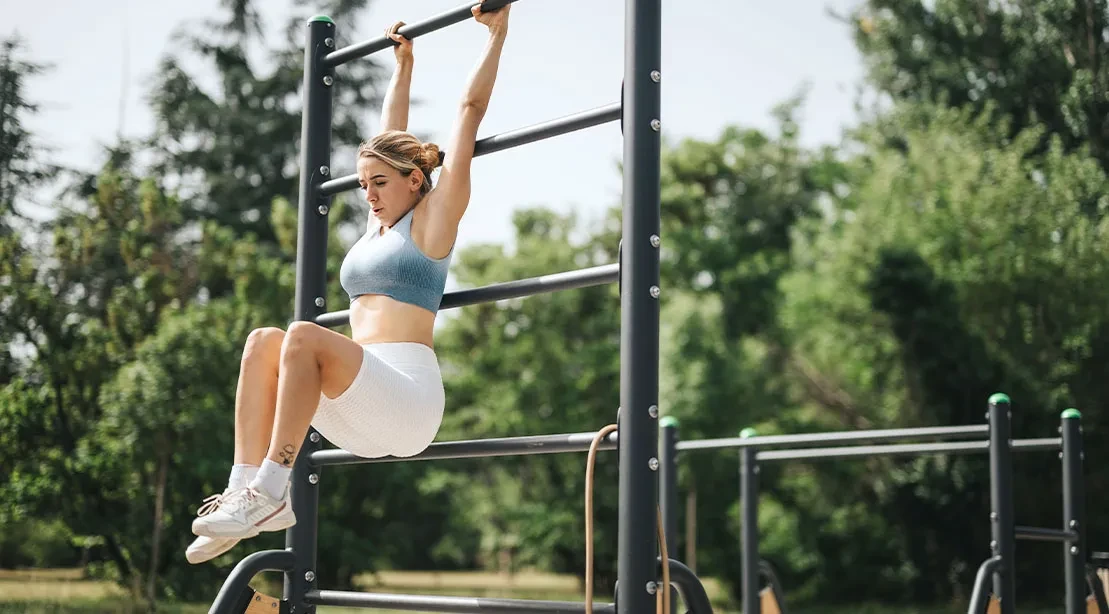
The hanging knee raise is a rigorous test of strength, neuromuscular control, and mental fortitude. Performed by suspending from a pull-up bar, resisting pendular motion, and elevating the knees in a controlled arc toward the chest, this exercise places intense demand on the anterior core (rectus abdominis and obliques), grip musculature (forearm flexors and extensors), and latissimus dorsi—creating a holistic stimulus for adaptation.
Beyond its challenging nature, the hanging knee raise builds a foundation for:
Enhanced performance in compound lifts (e.g., squats, deadlifts, overhead presses),
Improved postural alignment (by strengthening the lats and core stabilizers),
A well-defined midsection—the aesthetic goal of most trainees.
It is time to move beyond basic crunches and planks; vertical core training is the next step in your progression.
What Makes the Hanging Knee Raise a Superior Core Exercise?
While the hanging knee raise is often categorized as an “ab exercise,” its benefits extend far beyond the midsection. Here’s why it deserves a place in any serious training program:
1. Comprehensive Core Stimulus
The exercise targets both spinal flexion (via concentric contraction of the anterior core) and hip flexion (via activation of the iliopsoas and rectus femoris), all while resisting momentum-induced compensation. This makes it one of the most well-rounded core exercises available—ideal for strength athletes, functional fitness practitioners, and anyone seeking to progress from isolated crunches to full-body, functional core training.
2. Grip and Forearm Development
The isometric hang alone imposes a significant demand on the grip and forearm flexors. This builds transferable strength that carries over to pull-ups, loaded carries (e.g., farmer’s walks), deadlifts, and any movement requiring grip proficiency—a critical but often overlooked component of total-body strength.
3. Total-Body Stabilization
Maintaining a stable torso during leg movement requires co-contraction of the lats, abdominal muscles, and shoulder stabilizers (e.g., rotator cuff, trapezius). This improves kinetic chain efficiency, which translates to better performance in heavy compound lifts and gymnastics-derived progressions (e.g., muscle-ups, front levers).
4. Hip Flexor Strength and Endurance
Strong hip flexors are essential for explosive athletic movements (sprinting, jumping) and daily function. The hanging knee raise effectively targets these muscles—especially as fatigue sets in—mimicking the metabolic demands of real-world training and sport.
Common Technique Errors (and How to Fix Them)
The hanging knee raise may appear simple, but poor technique can lead to momentum-dependent execution, reduced efficacy, or even injury. Below are the most frequent mistakes and their corrections:
1. Overreliance on Leg Swing
Using momentum (instead of core-driven control) to raise the knees diminishes muscular tension and compromises the core stimulus.
- Fix: Initiate each repetition with deliberate intent. If swinging occurs, reduce your tempo, reset between reps, and prioritize a mind-muscle connection with the core. Progress slowly—control is more important than speed.
2. Passive Shoulder Position
Allowing the shoulders to hang loosely (without engaging the upper back and lats) places unnecessary stress on the shoulder joints and reduces the exercise’s effectiveness.
- Fix: Adopt an active hang by retracting and depressing the scapulae (pull your shoulder blades down and away from your ears). This activates the lats and stabilizes the upper body, creating a solid foundation for the movement.
3. Incomplete Range of Motion
Elevating the knees only a few inches from the starting position fails to fully engage the anterior core and hip flexors.
- Fix: Drive your knees to at least hip height (or higher) on every rep. Full range of motion ensures maximal muscular recruitment—quality always supersedes quantity.
4. Uncontrolled Eccentric Phase
Rapid, uncontrolled leg descent places excessive stress on the lumbar spine and decouples core engagement.
- Fix: Prioritize control during the eccentric (lowering) phase. Lower your legs slowly and under constant tension to protect the spine and optimize muscular activation.
How to Program the Hanging Knee Raise
Whether you’re a novice or an advanced lifter, here’s how to integrate the hanging knee raise into your program for maximal benefit:
Warm-Up: Use 2–3 sets of 8–10 controlled reps to activate the core, lats, and grip before heavier lifting.
Core Circuit: Pair it with other core exercises (e.g., weighted planks, cable crunches) in a circuit before barbell work (to avoid grip fatigue affecting compound lifts).
Grip-Sparing Pairings: Combine it with exercises that do not heavily tax the grip (e.g., bench press, overhead press, lunges) to ensure you can perform the hanging knee raise with proper form.
The hanging knee raise is more than just an “ab exercise”—it’s a full-body movement that builds strength, stability, and functional fitness. By avoiding common errors and programming it strategically, you’ll unlock a new level of core development and athletic performance.
Are you ready to take your core training vertical?
Hanging Knee Raises: 5 Benefits for Building Strong Abs Anywhere
Share this article: