The 28-Day Lean Meal Plan & Alternatives to the Bulgarian Split Squat
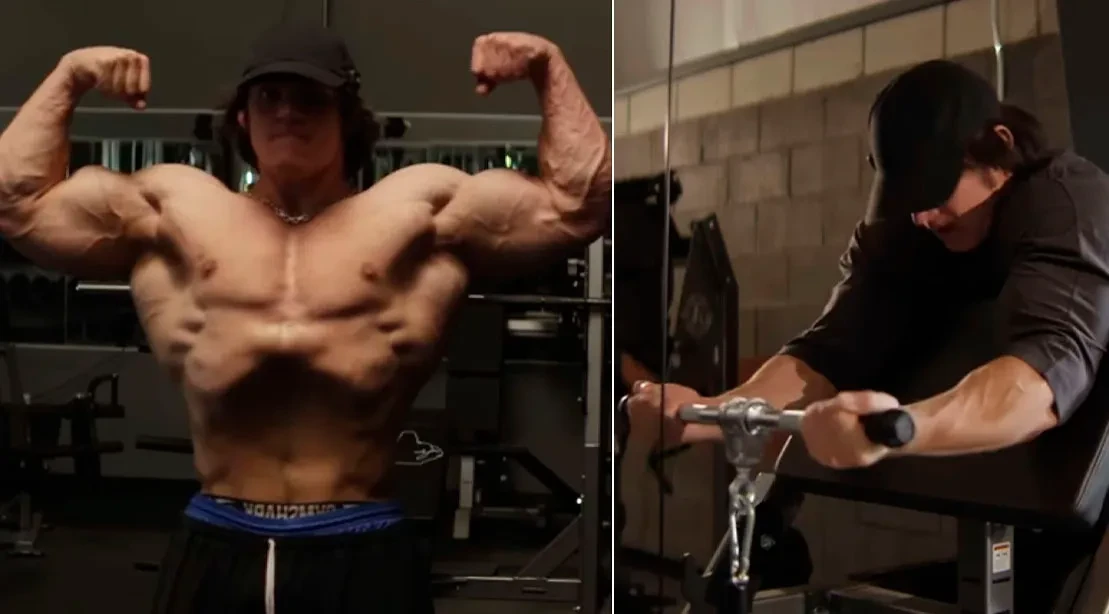
The 28-Day Lean Meal Plan emphasizes that with a strategic framework and unwavering discipline, significant muscular definition can be achieved in just 28 days. For additional context, refer to the full article.
The Bulgarian Split Squat: A Polarizing Exercise
The Bulgarian split squat (BSS) is a divisive movement among strength athletes—one that evokes equal parts admiration and disdain. Admiration stems from its ability to build unilateral strength (single-leg dominance) and target the quadriceps and glutes with exceptional efficacy. Disdain, however, arises from its inherent difficulty and propensity to highlight even the most subtle lower-body imbalances. Like many, I continue to incorporate it into my routine, as the benefits marginally outweigh the discomfort—though not by a significant margin.
Yet the BSS is not universally accessible. Some athletes grapple with the setup mechanics, while others struggle with balance during repetitions; the elevated rear foot can make the exercise feel more like a balancing act than a structured squat.
Why Seek Alternatives?
If you aim to improve single-leg strength without the frustration of the BSS, this guide is tailored to your needs. Below, we dissect the biomechanical efficacy of the BSS and provide five alternative exercises that preserve strength and hypertrophy (muscle growth) gains.
The BSS is not performed for its ease—it is performed for its results. It yields meaningful adaptations for any athlete willing to tolerate the discomfort.
What Makes the BSS Effective?
The BSS excels because it:
Prioritizes unilateral loading (critical for reducing strength imbalances).
Maximizes quadriceps and gluteal activation.
Challenges balance and core stability.
Despite these advantages, the BSS’s setup complexity, physical discomfort, and balance requirements can be prohibitive for some. When seeking alternatives that do not compromise training outcomes, prioritize the following criteria:
Key Criteria for BSS Alternatives
Unilateral Focus: A credible alternative must target one leg at a time. This ensures improvements in balance, reduction of bilateral strength gaps, and enhanced athletic performance.
Gluteal & Quadriceps Activation: The BSS is brutal on the quads and glutes—any substitute must replicate this muscle recruitment pattern.
Enhanced Stability: The BSS’s setup is a barrier for many. An ideal alternative minimizes balance demands while preserving the exercise’s biomechanical benefits.
Scalability: Top alternatives allow for adjustments to tempo, load, or range of motion to align with an athlete’s training level and objectives.
5 Science-Backed Alternatives to the Bulgarian Split Squat
Below are five exercises that meet the above criteria—making leg day more manageable (but still challenging).
1. Front-Foot Elevated Split Squat
This variation elevates the front foot on a 2–4-inch platform, increasing the working leg’s range of motion and stretch. It replicates the BSS’s joint angles while providing greater stability and reducing rear-leg tension. The elevated front foot facilitates deeper hip and knee flexion, maximizing quadriceps and gluteal activation.
Cue: Maintain an upright torso and flat front foot; control the descent and drive through the front foot to return to the starting position.
Sets & Reps: 3–4 sets of 10–15 repetitions per leg.
2. Front-Rack Reverse Lunge
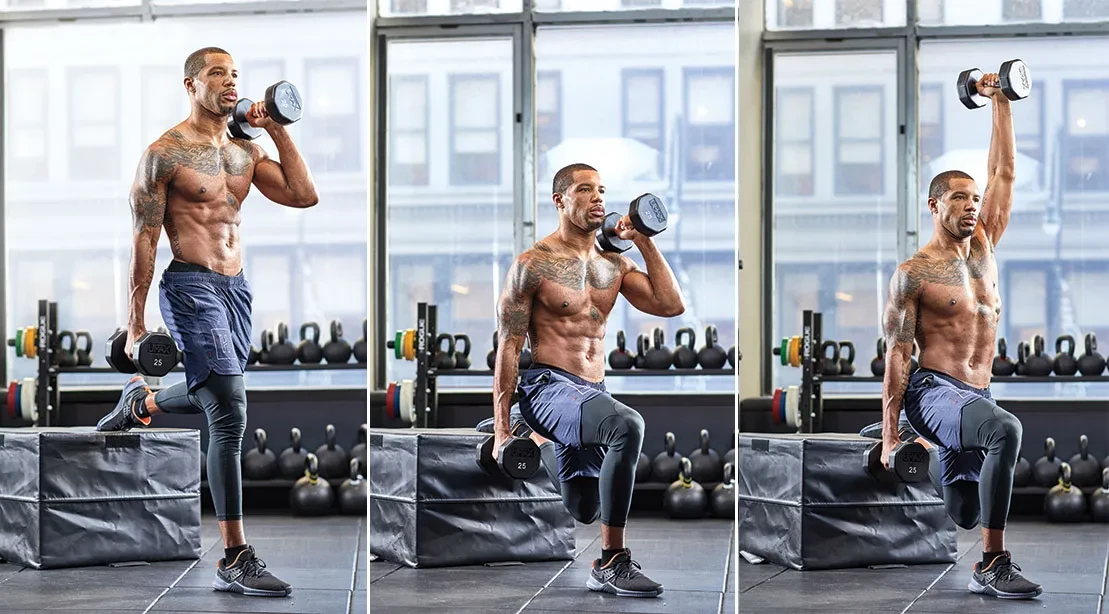
This reverse lunge variation uses a barbell held in the front rack position (across the shoulders), which shifts the center of mass anteriorly. Compared to the BSS, it is more knee-friendly due to the step-back mechanics—and the front-rack position also activates the anterior core and upper back. It maintains the BSS’s balance challenge, so grip the barbell firmly.
Cue: Keep elbows high, chest upright, and shoulders retracted. Avoid rushing the setup or lunge; push through the front foot to return to the start.
Sets & Reps: 3 sets of 6–8 repetitions per leg.
3. Trap Bar Split Squat
Perform this exercise with a trap bar held in a neutral grip. The bar’s design keeps the load centered and low, minimizing lumbar strain and balance requirements. It accommodates heavy loading, though a limitation is that some athletes may struggle with full hip extension due to bar interference with the rear leg.
Cue: Maintain an upright torso; lower straight down until the rear knee hovers just above the floor.
Sets & Reps: 3–4 sets of 8–12 repetitions per leg.
4. Zercher Split Squat
This exercise involves holding a barbell in the Zercher position (crook of the elbows), which concurrently challenges core stability, posture, and lower-body strength. The Zercher position shifts the load forward, increasing core and upper back activation while mandating an upright torso—making it quadriceps-dominant and more balance-friendly than the BSS.
Cue: Cradle the bar securely, keep the chest upright and shoulders retracted, brace the core, and control the descent.
Sets & Reps: 3 sets of 8 repetitions per leg.
5. Hatfield Split Squat
Use a safety squat bar and grip a power rack or support bars for added stability. The enhanced stability allows you to focus on depth and loading the working leg—making it ideal for building quadriceps/gluteal size/strength, rehabilitating balance deficits, or accommodating shoulder issues that prohibit traditional barbell squats.
Cue: Use minimal support to maintain stability—avoid pulling yourself up with the rack.
Sets & Reps: 3–4 sets of 10–12 repetitions per leg.
Final Note
These alternatives are designed to deliver the same (or better) results as the BSS—without the frustration of its setup or balance demands. Choose the variation that aligns with your goals, training level, and physical limitations—and remember: consistency beats perfection.
Bulgarian Split Squat Guide: Build Stronger Legs and Better Balance
Share this article: