28-Days-to-Lean Meal Plan
With a structured plan and consistent discipline, significant leanness can be achieved in just 28 days.
The principle of pushing one’s physical limits to achieve physique changes is a frequently cited mantra—and for good reason: muscle hypertrophy requires mechanical stress to induce microtears, which then repair to yield stronger tissue. However, evidence-backed fitness coach Jeff Nippard demonstrates that periods of reduced workout duration—even halving volume—can yield unexpected outcomes.
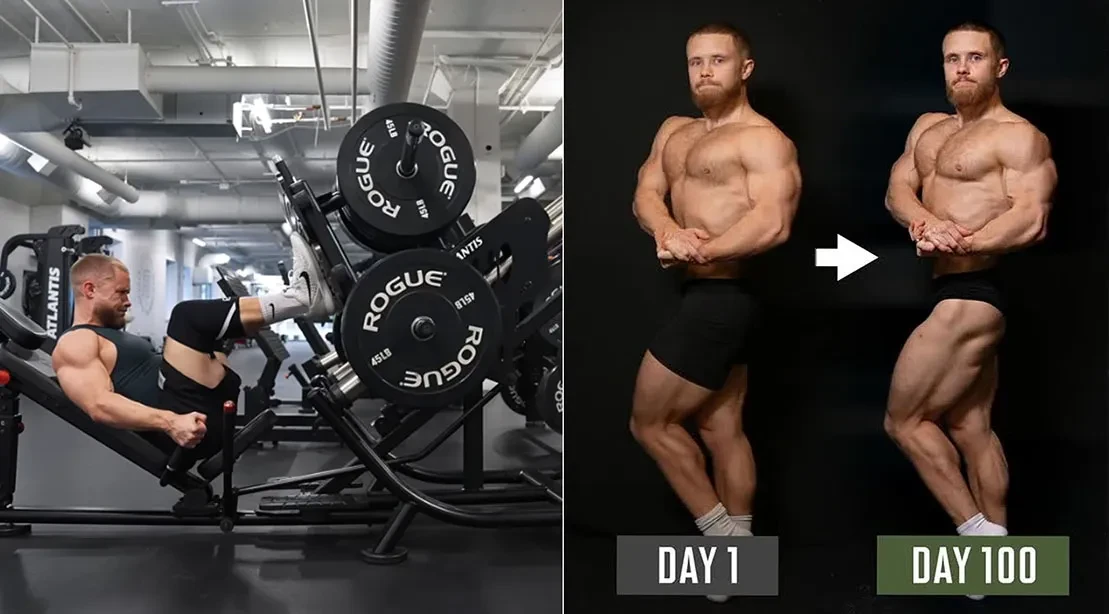
In a recent YouTube video, the astute Canadian coach posed the question: “What would happen if you only did half your workout?”—noting he had long been a “high-volume trainee.” For his experiment, Nippard reduced his typical 3–4 sets per exercise to 1–2 sets, maintaining this protocol for 100 days. “On paper, this volume falls below the threshold most experts consider necessary for maximal muscle growth,” he observed.
In terms of per-muscle-group volume, Nippard averaged 6.5 sets per week—contrast this with research suggesting higher volumes (even exceeding 10 sets per muscle group weekly) correlate with greater gains. A 2024 review even posited that up to 43 sets per muscle group weekly could drive hypertrophy. However, these findings faced criticism due to a lack of precise muscle mass measurements: were the observed gains attributable to true lean muscle growth or merely exercise-induced muscle swelling? Nippard further noted a limitation in many high-volume studies: they often focus on isolated muscle groups (e.g., biceps, triceps, quads) without accounting for real-world full-body workout splits.
Outcomes of Reduced Volume Training—and Why It Matters
What were Nippard’s results, and why might this protocol be worth experimenting with? In a recent Instagram recap, he expressed “pleasant surprise” at his ability to maintain muscle mass despite halving his workload. Initially, he felt underworked—his typical 2-hour sessions shrank to under an hour—but by day 50, his recovery was “better than ever,” and he reported increased training enjoyment. After 100 days, objective measurements revealed surprising results for the natural bodybuilder:
Though Nippard was in a calorie deficit (a variable influencing total weight loss), he gained 0.5 pounds of lean mass in the final 70 days. This places him within the margin of error for muscle maintenance or even modest growth—despite the reduced volume.
Given these data, why might lower-volume training support meaningful strength gains? “The focus you can bring to just 2 sets is incredible,” Nippard reflected. “Instead of dreading lengthy workouts, I found myself excited to train daily.” The results were so compelling that he revised his prior guidance: low-volume training is highly effective during cutting phases, in part due to enhanced recovery—even in a calorie deficit.
For bulking phases, Nippard notes low-volume training remains viable—but suggests targeting one muscle group with 30 sets weekly, rotating the high-volume focus “every few months.” He is so intrigued by this approach that he plans to test it in a future experiment.
“Research indicates lack of time is one of the top barriers to gym attendance,” Nippard noted. For high-volume trainees seeking to rekindle their passion for training, short-term low-volume phases are unlikely to cause muscle loss and may better align with busy schedules. Even the 2024 high-volume review—while noting “muscle size and strength gains increase with volume”—acknowledges that beyond a certain point, “diminishing returns” set in. Variability in training volume, therefore, may benefit long-term muscle health.
View the full video below:
High Volume vs Low Volume Training: Jeff Nippard Explains the Science
Share this article: