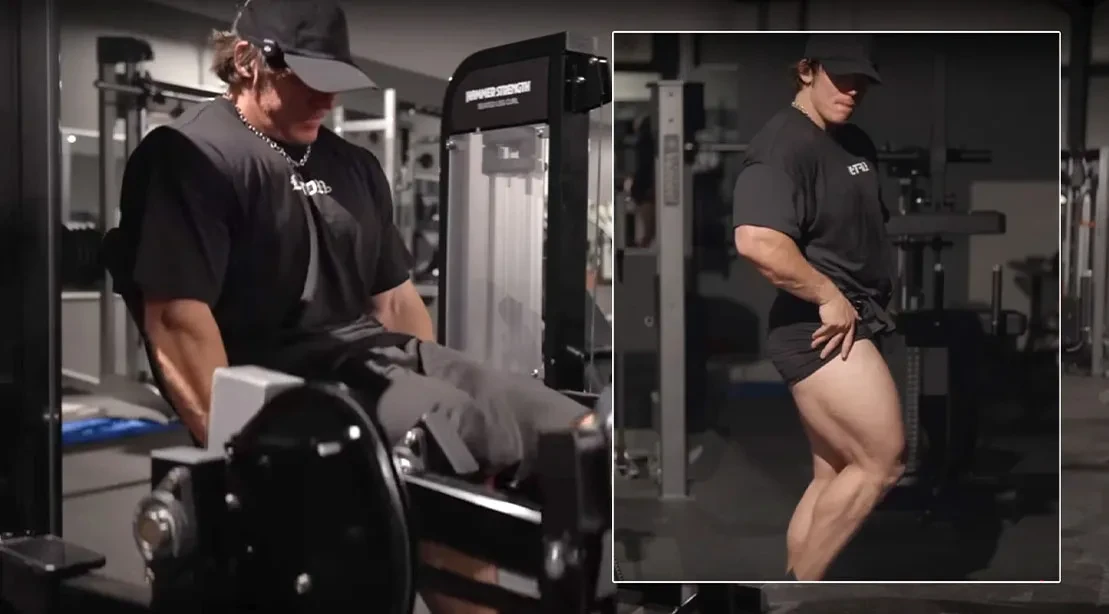
28-Days-to-Lean Meal Plan
With a structured plan and unwavering discipline, significant muscular definition can be achieved in just 28 days.
Read article
When envisioning Every Minute on the Minute (EMOM) training, the typical mental image involves rapid weightlifting—lungs burning, sweat pooling at your feet—as you push through fatigue. But what if we invert this paradigm and prioritize load over speed?
You build strength—rapidly.
The 15-Minute Heavy Deadlift EMOM: A Test of Strength and Resilience
This 15-minute deadlift EMOM transcends a mere workout; it serves as a benchmark for strength, focus, and discipline. Load the barbell to 90% of your one-repetition maximum (1RM), then execute one technically precise rep at the start of every minute.
Reset your position, regulate your breathing, and repeat. Fifteen reps. Fifteen minutes. No extraneous effort.
This session is about mastery of the load: refining technique under fatigue, building confidence that translates to all other lifts, and testing your mental resilience. If you are ready to challenge your limits, approach the barbell and let the clock guide your effort.
Why Heavy EMOMs Work
Heavy EMOMs merge discipline with intensity. Rather than chasing a maximal single (1RM), you operate at the threshold of your capacity—repeatedly lifting near-maximal weight on the clock’s cue.
Unlike high-repetition sets that induce profound fatigue or heavy triple sets requiring extended rest, the EMOM structure sustains high intensity without overtaxing. You receive just enough recovery to regroup before the next effort. Over 15 minutes, this accumulates to 15 high-quality reps at 90% of your 1RM—an substantial strength stimulus in a condensed timeframe.
Key Outcomes
Each rep, executed with unwavering focus, is not merely a completion of work—it is a repeated reinforcement of proper setup, biomechanical positioning, and bar trajectory.
The session’s structure is straightforward:
90% of your 1RM
1 rep at the start of every minute
15 continuous minutes
Is this not a compelling test of your abilities?
Safety Protocol
If technical form deteriorates (e.g., rounded lumbar spine, incomplete lockout), terminate the session prematurely or reduce the load by 5–10%. Prioritize form over volume—quality always trumps quantity.
In a mere 15 minutes, you will accumulate more high-quality work than the average individual completes in a full hour.
Execution Guidelines
To maximize effectiveness and minimize risk, follow these steps:
1. Prioritize a Comprehensive Warm-Up
Analogous to a vehicle requiring a warm-up to avoid mechanical stress, allocate 10–15 minutes to prime your body for heavy lifting. Focus on:
Grip strength (farmer’s carries, plate pinches)
Lumbar spine mobility (cat-cow stretches, bird-dogs)
Glute and hamstring activation (bodyweight Romanian deadlifts, banded hip thrusts)
Your tissues must be supple and your nervous system activated before loading the barbell.
2. Calculate Your Working Weight
Base the session on 90% of your 1RM. If your 1RM is unknown:
Test it in advance (using a gradual build-up to a single maximal effort)
Use a validated strength calculator (e.g., the Epley formula)
If the calculated 1RM falls within a 5-pound range, round down—never up. For example:
- A calculated 1RM of 386 pounds → use 380 pounds
This ensures you stay within a safe, sustainable load for repeated efforts.
3. Treat Each Rep as an Independent Task
Never rush or “chain” reps. For every lift:
Reset your stance (shoulder-width, toes slightly outward)
Re-establish your grip (overhand or mixed, based on preference)
Brace your core (360-degree abdominal tension, like bracing for a punch)
Execute a smooth pull (drive through the heels, keep the bar close to your body)
Lock out fully (hips forward, shoulders back)
Every rep must be as technically sound as the first.
Integrating the Session Into Your Weekly Routine
For those seeking to add this EMOM to their training schedule, consider these strategies:
As a standalone strength day: Pair it with light upper-body work (e.g., overhead presses, rows) to avoid overtaxing the posterior chain.
Post-leg day accessory: Use it to reinforce deadlift technique after a lower-body focus (e.g., squats, lunges).
Weekly strength finisher: Add it to the end of a full-body workout to cap off your session with a high-intensity challenge.
Post-Session Recovery
After completing 15 reps of 90% 1RM deadlifts—15 focused reps performed under temporal pressure—incorporate these protocols to optimize recovery:
Bodyweight Hip Extensions: 2 sets of 15 reps to restore hip and lumbar spine mobility.
Supine Diaphragmatic Breathing: 3–5 minutes of slow, deep breaths (inhale through the nose, expand the belly) to downregulate the autonomic nervous system.
Low-Intensity Cycling: 5–10 minutes of easy pedaling to enhance blood flow and clear metabolic waste from the lower body and back.
Was this not a rewarding challenge?
By embracing the discipline of heavy EMOMs, you are not just lifting weights—you are building the mental and physical resilience required to achieve long-term strength goals. Step up to the barbell, trust the process, and let the clock be your guide.
15-Minute Heavy Deadlift EMOM Workout for Strength and Conditioning

Share this article: